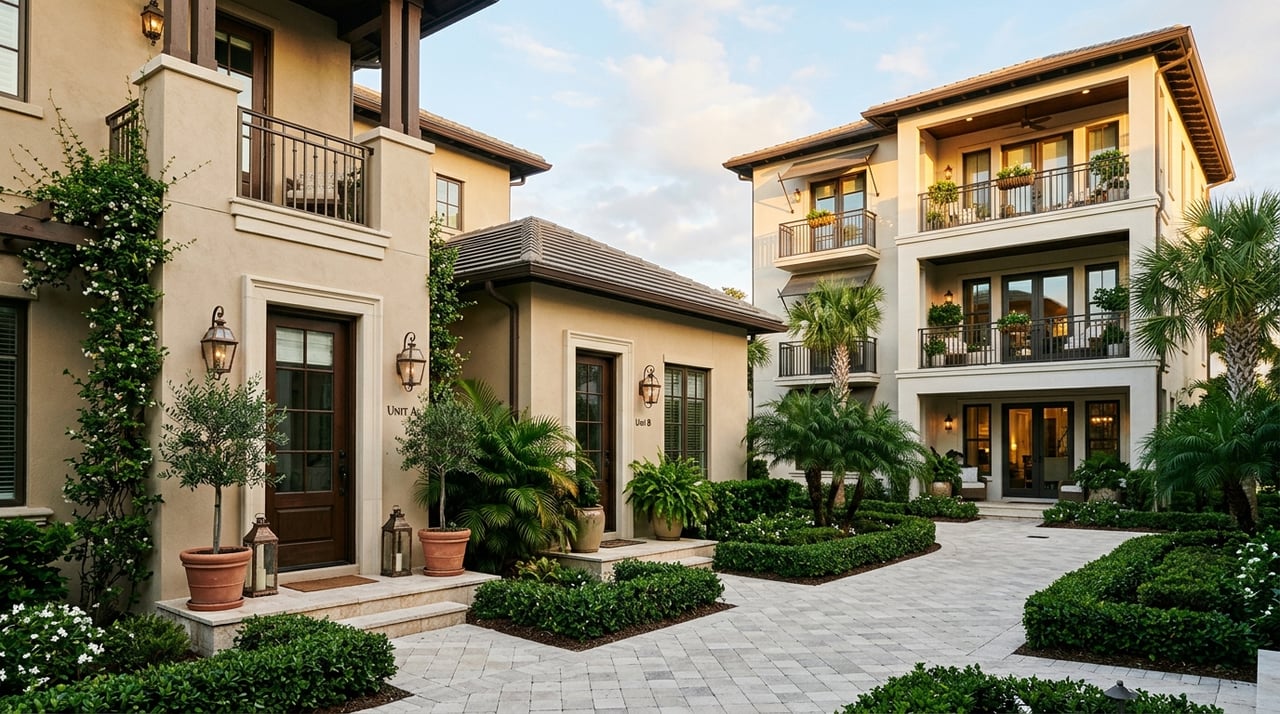
Trying to choose between a condo and a townhome in Orlando? You are not alone. Many buyers like the low-maintenance appeal of both, but the right fit often comes down to ownership, fees, insurance, and the kind of lifestyle you want day to day. This guide will help you sort through the differences so you can make a smarter move in the Orlando area. Let’s dive in.
Condo vs. Townhome Basics
At first glance, condos and townhomes can seem pretty similar. Both can offer shared amenities, attached living, and less upkeep than a detached house. But in Florida, the biggest difference is not just how the property looks. It is how ownership is set up.
A condo is a legal ownership form. In Florida, you typically own your individual unit and also share ownership of the common elements with other owners, while the association maintains those common elements. That means hallways, roofs, building exteriors, and other shared areas are usually handled through the condo association.
A townhome, by contrast, is often an attached single-family home on its own lot. In Orlando planning terms, townhomes are generally defined as three or more attached dwelling units, with each unit on a separate lot. That distinction matters because two homes that look alike from the street may come with very different ownership and maintenance rules.
Why the documents matter
This is where many buyers get tripped up. The marketing description may say “townhome-style condo” or simply “townhome,” but the recorded declaration and association documents tell the real story.
In a Florida HOA community, the governing documents spell out what the association can collect in dues, what it maintains, what owners are responsible for, and what rules apply. So before you decide based on appearance alone, you want to know exactly what you are buying.
How Fees and Maintenance Compare
One of the biggest day-to-day differences between a condo and a townhome in Orlando is how monthly costs are structured. Both can have association dues, but what those dues cover can vary a lot.
Condo fees often feel more all-in. That is because condo associations are generally responsible for maintaining common elements and, in certain insurable losses, repairing or reconstructing the property they are responsible for under Florida law.
Townhome fees can be lower, higher, or somewhere in between. It all depends on the community documents and whether the HOA covers things like exterior paint, roof replacement, landscaping, or shared amenities.
Why condo dues can feel higher
For many Orlando buyers, condo dues stand out right away. One reason is that Florida requires structural integrity reserve studies for many residential condo buildings that are three stories or higher, and current law limits the ability to waive reserves for certain required items in those associations.
Those reserve-study items can include the roof, structure, fire protection systems, plumbing, electrical systems, waterproofing, and exterior windows and doors. In plain terms, that means some condo communities have to plan more carefully for major future expenses. That can increase monthly carrying costs.
Florida condo law also warns that waiving reserves may expose owners to unexpected special assessments. So if you are considering a condo, it is smart to review the budget, reserve information, and any history of special assessments before you make an offer.
Why townhome costs vary more
A townhome can feel more like a house in your daily routine. You may have your own front entry, attached garage, and more separation from neighbors. But that does not automatically mean your maintenance responsibility is simple.
In Florida HOA communities, assessments and special assessments depend on the budget and governing documents. Some townhome associations cover exterior maintenance and roofs, while others leave more of that responsibility to the owner. That is why one Orlando townhome community can feel very different from another, even if the homes look similar.
Insurance Questions to Ask
Insurance is another place where condo and townhome ownership can differ in important ways. If you skip this part, your monthly budget can get out of sync fast.
For a Florida condo, owners typically need an HO-6 policy. Florida’s consumer insurance guidance says this usually covers personal property, liability, and required loss-assessment coverage.
The condo association’s master policy may not cover many items inside your unit. That can include personal property, floor and wall coverings, appliances, built-in cabinets and countertops, and window treatments that serve only your unit. So if you are buying a condo, you need to know where the association’s coverage stops and where your coverage begins.
With a townhome, the policy type depends on the ownership structure and what the association covers. The insurance question is not just whether the home is attached. It is whether you own the lot, what the HOA maintains, and how the governing documents divide responsibility.
A simple insurance checklist
Before you move forward on either property type, ask for:
- The association insurance summary
- A clear outline of owner vs. association responsibilities
- The community budget and dues information
- Any recent or pending special assessment history
That short review can help you avoid surprises after closing.
Where Condos Fit Best in Orlando
In Orlando, condos are often a natural fit in denser, more urban areas. If you want a more walkable setting, easier access to downtown amenities, or a transit-oriented lifestyle, condos may give you more options.
The City of Orlando reported that condos made up 36 percent of the city’s for-sale residential inventory at year-end 2023, with 1,304 condo sales that year. That is a meaningful share of the market and a sign that condos remain an important part of the city’s housing mix.
Downtown Orlando is one of the clearest examples. The city’s downtown redevelopment efforts and walkability improvements support the kind of environment where condo living often makes sense.
Creative Village is another example of this urban pattern. The city describes it as a mixed-use, transit-oriented district next to SunRail and LYNX Central Station, with housing, retail, education, and office uses. If your priority is convenience and a more central lifestyle, this type of setting may point you toward a condo.
Where Townhomes Fit Best in Orlando
Townhomes are especially common in newer growth areas and suburban-style master-planned communities. If you want a more house-like layout without taking on the full maintenance of a detached home, a townhome may feel like the better middle ground.
Orlando is encouraging more housing variety as the city grows. From 2020 to 2024, the city says population grew about 14 percent while housing stock grew 11 percent, leaving an estimated shortage of about 9,400 units. Townhomes are part of that solution.
Lake Nona is a strong example. City planning documents include townhome projects there, including the 125-unit Lake Nona N-4 Townhomes project, along with other attached housing types.
Horizon West in Orange County is another clear townhome-friendly market nearby. Its planning documents show a community built around mixed-use villages and higher-density residential areas, including a designated Townhome District.
Townhomes are not only suburban, though. Orlando has also seen urban infill townhome development, such as Park Lake Townhomes, a 37-unit project that shows newer townhome options can include larger, three-story homes with attached garages.
How to Decide What Fits You Best
The best choice usually comes down to how you want to live, not just what looks better online. If your top priorities are convenience, a central location, and less exterior responsibility, a condo may be the better fit.
If you want a more private, house-like feel with still-manageable maintenance, a townhome may make more sense. In Orlando, that often lines up with condos in the urban core and townhomes in places like Lake Nona, Horizon West, and newer infill pockets.
Choose a condo if you want:
- A more hands-off exterior lifestyle
- A more urban or walkable location
- Shared amenities in a denser setting
- Less direct responsibility for building exterior upkeep
Choose a townhome if you want:
- A more house-like feel
- More privacy and separation
- A layout that often includes an attached garage
- Low-maintenance living in many suburban-style communities
What to Review Before You Make an Offer
No matter which direction you are leaning, the smartest next step is document review. This is where a good decision becomes a confident one.
For a condo, ask how much is in reserves, what the association maintains, and whether any special assessments are under discussion. Since reserve requirements can be a major factor in Florida condo ownership, this part deserves close attention.
For a townhome, ask whether the HOA covers the roof, exterior paint, landscaping, and structural components. You should also review any architectural rules and leasing restrictions so you know what flexibility you will have after closing.
A few key items to request include:
- Declaration and governing documents
- Current budget
- Reserve information
- Insurance summary
- Assessment history
- Rules related to exterior changes and leasing
When you compare these items side by side, the better fit often becomes much easier to see.
If you are weighing condo living against townhome living in Orlando, the answer is rarely one-size-fits-all. Your ideal choice depends on how much maintenance you want to handle, how you feel about fees, what kind of location fits your routine, and how the association documents are structured. If you want help comparing options across Orlando, Lake Nona, Horizon West, or nearby Central Florida communities, connect with Omar Sanchez for practical guidance tailored to your move.
FAQs
Is a townhome always cheaper than a condo in Orlando?
- Not necessarily. Monthly costs depend on what the community covers, the amenities, and whether the association is responsible for major exterior items.
Why do condo fees sometimes run higher in Florida?
- Condo fees can be higher because associations maintain common elements and, in many buildings three stories or higher, must fund reserves for major structural and building components required by Florida law.
Are condos more common than townhomes in Orlando?
- Condos are a major part of Orlando’s for-sale inventory, especially in the city core, while townhomes are increasingly common in growth areas and infill projects.
What documents should you review before buying a condo in Orlando?
- You should review the declaration, budget, reserve information, insurance summary, and any history of special assessments.
What should you ask about before buying a townhome in Orlando?
- Ask what the HOA covers, whether the roof and exterior paint are owner or association responsibilities, and what rules apply to exterior changes and leasing.